
What is the illuminaty
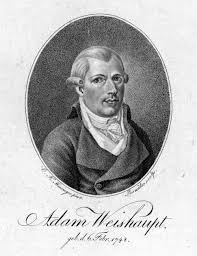
secrete society illuminati ,The Bavarian Illuminati was a clandestine society founded on May 1st, 1776, in Ingolstadt, Germany, during the Enlightenment period.Its creator, Professor Adam Weishaupt, established the association intending to foster the ideals of the period.
These ideals included the following:
- Promotion of mutual assistance and equalit
- Opposition to religious influence over public life and political policy.
- Curtailment of the abuse of state power.
- Advancement of women’s education.
History of the secrete society illuminati
secrete society illuminati Various spiritual movements that believed in the concept of “light” as superior wisdom-either from a divine source or from enlightened human intelligence served as early roots of the Illuminati.
Early secrete society illuminati and Predecessors
Among these movements were the Alumbrados of Spain. Tracing their origins back to Gnosticism, the Alumbrados surfaced around 1492, seemingly under the influence of similar movements from Italy.
Their early leadership included figures such as Maria de Santo Domingo, known as La Beata de Piedrahita, a revered prophet and mystic. Even St. Ignatius of Loyola was accused of sympathizing with the Alumbrados, demonstrating their influence.
Another early group that inspired the Illuminati was the Rosicrucians, who earned public notice in 1537. Their teachings combined Egyptian Hermeticism, Christian Gnosticism, Jewish Kabbalah, alchemy, and other esoteric beliefs and practices. Their secretive mystical nature marked them as the precursors to group identify as the “illuminati”
Organization of the Illuminati
The organization of the secrete society illuminati reveals an intricate structure marked by a calculated selection process and a meticulously devised internal communication system. Recognizing its influential members is key to understanding the Illuminati’s influence and reach.
Member Selection and Recruitment
The secrete society illuminati employed a strategic recruitment approach, primarily targeting individuals of social significance. Weishaupt initiated the process by carefully selecting disciples from among his students. He aimed to widen the group’s reach to Eichstätt, Freising, Munich, and beyond, emphasizing the recruitment of young men of affluence, rank, and social importance. The organization was also considerably influenced by the Freemasons, recruiting its members and adopting some of their structural elements. A prominent convert, Adolf Franz Friedrich Ludwig Knigge, played a critical role in this process. Knigge drove the Illuminati’s successful penetration and eventual domination of several Masonic lodges.
Structure of the Illuminati
The secrete society illuminati was structured as a strict hierarchical organization, drawing inspiration from the Jesuits and the Freemasons. The society was organized into different classes, each with distinct roles and responsibilities:
The Nursery:
This was the entry level of the organization, consisting of:
- Novice
- Minerval
- Illuminatus Minor
The Masonic Grades:
The organization borrowed this stage from the Freemasons. Members progressed through the three degrees of:
- Apprentice
- Fellow Craft
- Master
The Mysteries:
This upper echeton of the society offered
- Lesser Mysteries: This included the degrees of Priest and Regent
- greater mystries: this encompassed the levels of Magus and Rex
Illuminati Secret Society Theories
People have woven numerous theories around the Illuminati. While some attribute overarching world events to them, others tie them to elements of popular culture. These theories include the following:
- Global Control: Perhaps the most pervasive theory surrounding the Illuminati posits that the Illuminati has insinuated itself into the highest echelons of government and finance worldwide, thereby manipulating global events. This idea suggests that the Illuminati influences wars, the economy, and social policies to achieve their secret objectives, effectively controlling the world.
- Media Manipulation: Some conspiracy theorists propose that the Illuminati controls the media, using it to shape public opinion and maintain its secrecy. Their ostensible tools range from news stories to movies, music, and widespread cultural phenomena.
- Pop culture Influence: The idea that the Illuminati manipulates the entertainment industry is common. Allegedly, they use famous figures in music, movies, and television to spread their symbols and ideology subtly, garnering influence over the public mind.
Legacy of the Illuminati
The Illuminati has had a lasting impact and is a prominent subject of speculatin and conspiracy theories.
Suppression of the Illuminati in Bavaria
The Bavarian Illuminati operated under a veil of secrecy and exclusivity, which inevitably led to their downfall. The group’s covert methods and philosophies were at odds with the principles of the Bavarian government, leading to a crackdown on the order. In 1785, Karl Theodor, the Duke of Bavaria, issued an edict banning all secret societies, including the Illuminati. This marked the end of the Illuminati’s brief historical existence.
Authorities arrested many members, forcing others, including the group’s founder, into exile. The government confiscated and published the group’s internal correspondence, offering a glimpse into the workings of the secret society. These texts served to further vilify the illuminati perpetuating its reputation as a thread to traditional Authority